
Blank T-Shirt Suppliers and Manufacturers in Bangladesh: How to Read One
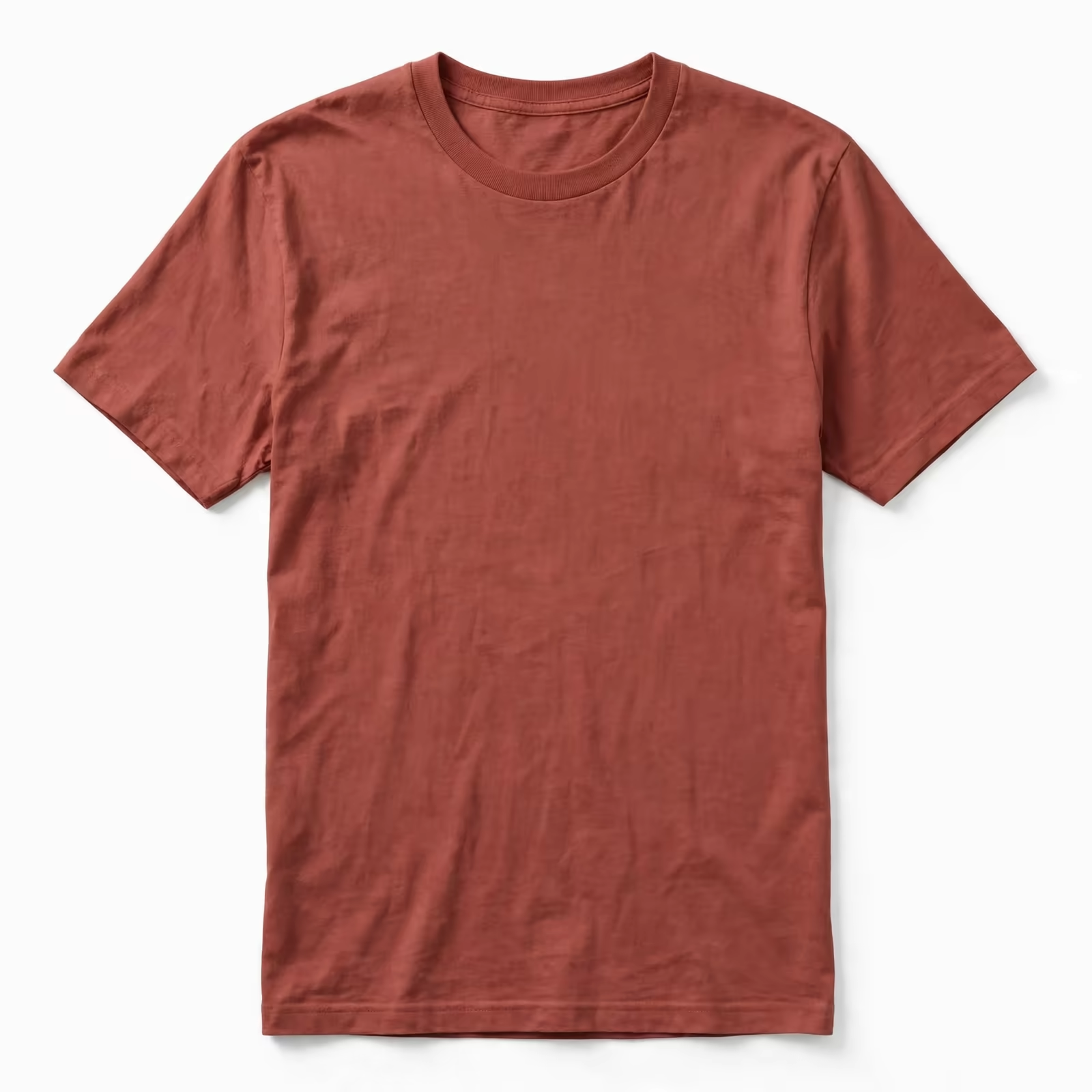
The brick red blank on this page is a working sample of the standard every colour ships at. Brick red is an unforgiving shade: dyed a touch light it looks washed out, a touch heavy it looks brown, and a supplier who cannot hold it inside the shade band cannot hold any colour in a programme. Judge the sample under daylight and under shop light; both are fair tests.
The jersey is the same single jersey the whole blank range runs on, so the hand feel you approve in brick red is the hand feel that arrives in black, white or bottle green. One cloth, one standard, every colour: that is what makes a blank range manageable for a buyer running many shades at once.
The Brick Red Blank, Part by Part
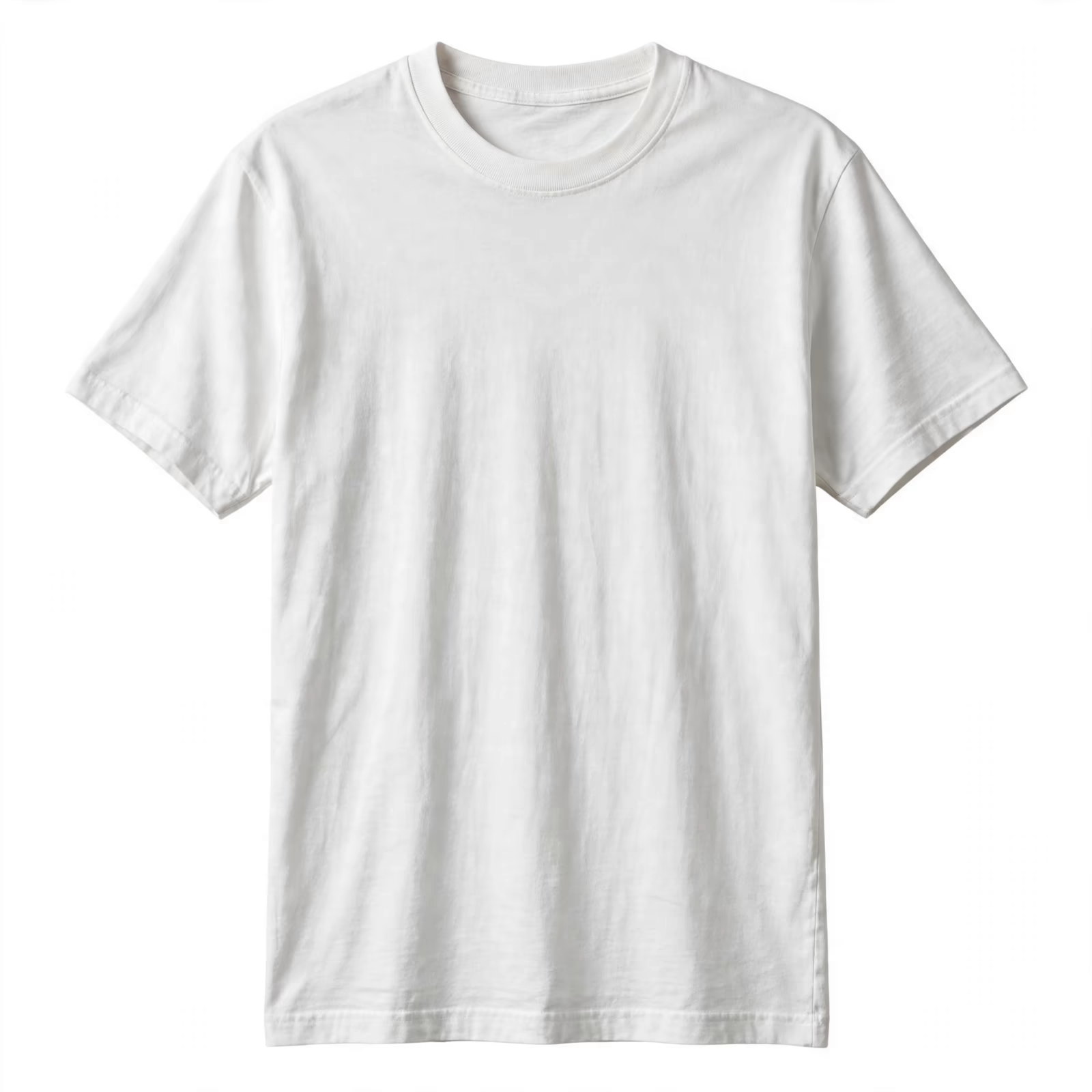
The front is one clean panel of brick red jersey, no print, no pocket, nothing that dates or divides opinion. The crew collar is ribbed, the short sleeves carry plain hems, and the body closes with a twin-needle stitched hem.
The back matches the front in its plainness, and side seams keep the body from twisting on the wearer. It is the simplest garment in the catalogue, which is exactly why it shows a factory’s discipline most clearly.
- Pure cotton single jersey, weighed per run
- Ribbed crew collar, shade-matched rib
- Plain front and back, ready for decoration
- Side-seamed body that hangs straight
- Twin-needle hems on sleeves and body
Shade Bands: The Test That Separates Suppliers From Sellers
Ask any experienced blank buyer what goes wrong first and they say shade: one carton a touch deeper than the next, and a uniform programme falls apart. Here the dyeing is held inside a shade band agreed on the sample, and every lot is read against that band before cutting.
A lot that falls outside the band is not sewn and hoped for; it is held and the buyer is told. That honesty costs a day occasionally and saves the programme every time, because a mixed-shade delivery costs the buyer his own customers.
One Spec Sheet, Kept Alive Across Every Reorder
The blank’s spec sheet is written once, from the approved sample: weight, shade band, chart, collar depth, label form, packing. It is not rewritten per order or kept in somebody’s memory; it is the document the floor works to, and the buyer holds a copy.
When the buyer changes something, the sheet is amended once, dated, and both sides work from the new version. This is how the fifth order comes out identical to the first, even when the people handling it have changed.
Blank T-Shirt Supplier in Bangladesh for USA Wholesale Programmes
USA wholesale programmes move blanks in volume, by colour and size, and their margin lives in not handling returns. Their checks are the shade band, the chart and the carton count, and this blank is built to pass all three without drama.
Cartons are packed to the programme’s size curve, so a wholesaler’s warehouse can shelve straight from the delivery. Your weight, your band and your label inside the neck: the blanks arrive as a system, not as a pile of shirts.
Build Sheet for the Brick Red Cotton Blank
| Fabric | Single jersey, 100 percent cotton |
|---|---|
| Collar | Ribbed crew neck, shade-matched |
| Sleeves | Short sleeves, plain stitched hems |
| Body | Side-seamed, straight regular fit |
| Shade Control | Agreed shade band, every lot read against it |
| Hem | Twin-needle stitched bottom hem |
| Label | Buyer’s woven label inside the back neck |
| Packing | Cartons packed to the buyer’s size curve |
| Colour | Brick red as pictured, full card on request |
What We Check Before a Carton Is Sealed
Finished shirts are read in a fixed order before packing: shade against the band, measurements against the chart, collar and seams by hand, then the count. A shirt that fails any point leaves the line at that point, not at the buyer’s warehouse.
The buyer receives the same checklist with the shipment documents, filled in for their cartons. A supplier who shows his checks has nothing to hide; one who will not show them is telling the buyer something.
The Four Reads on Every Finished Shirt
- Shade read against the agreed band
- Chest and length read against the chart
- Collar stretch and seam strength by hand
- Count verified twice before sealing
A Colour Card With the Working Shades, Not the Fashion Ones
Brick red leads this page because it carries both light and dark decoration well. The working card around it holds the shades blank programmes actually reorder: whites, stone, greys, greens, reds and earth tones, each with its band agreed before the first bulk dyeing.
A buyer’s own shade can be added to the card, dyed to a submitted swatch and banded like the rest. Once a shade is on the card, it stays there: the programme’s tenth reorder uses the same band as its first.
Blank Tees From Bangladesh for UK Events and Merchandise Buyers
UK events and merchandise buyers order against a date that cannot move, so their supplier question is not only quality but certainty. The plan here is written backwards from the event date, with knitting and dyeing reserved at confirmation, so the blanks land with time to print.
The shirts themselves are the same disciplined blank: banded shade, chart-true sizes, clean panels for the artwork. A photograph of the first sealed carton travels with the documents, so the buyer sees the packing before the truck does.
The Sample Pack a Serious Buyer Should Ask For
One shirt proves sewing; a sample pack proves a system. Ask for the blank in the middle size, a second shirt from a different point in the same run, and the spec sheet copy: if the two shirts match each other and the sheet, the supplier can repeat himself.
Wash both, measure both, hold them side by side under a good light. That ten-minute test, done before any price talk, is the cheapest insurance a blank programme can buy, and we are glad to be put through it.
- Two shirts from different points in one run
- The spec sheet copy with the samples
- Both washed and measured by the buyer
- Shade compared side by side
- Price talked only after the match is proven
How the Cartons Are Built for a Warehouse, Not a Photograph
Cartons are packed flat, shirts folded with the chest panel smooth, sizes layered in the order the buyer’s system expects. The outer mark names the colour, the size run and the count in the buyer’s own terms, so goods-in takes minutes, not an afternoon.
Mixed cartons are available where a programme decorates by event or by store, packed to a written mix per carton. The mix is part of the spec sheet, so a reorder repeats it exactly instead of being repacked from memory.
Trial Orders: Small First, Then the Programme
A careful buyer does not open with a container; he opens with a trial that behaves like a real order in miniature. The trial here runs through the same spec sheet, the same shade band and the same carton checks as a full programme, so what it proves is the system, not a one-off effort.
The trial cartons are marked as the programme’s would be, and the buyer’s warehouse handles them the normal way. If anything in that handling argues for a change, the spec sheet is amended before the programme starts, while changes are still cheap.
What a Factory Relationship Gives That a Trader Cannot
Buying from the floor that sews the shirts shortens every conversation: the person answering for the shade band is the person who set it. When a programme changes, the change is made where the work happens, and the buyer hears about problems from us first, not from his warehouse.
That directness is also why the spec sheet works: it is a factory document, read at the cutting table and the packing line, not a sales promise translated twice. Buyers who have been through a trader’s chain of explanations recognise the difference in the first exchange.
- Answers come from the floor that sews
- Problems surface before shipping, not after
- Changes are made where the work happens
- The spec sheet is a working document
How a Buyer Moves From Sample to Standing Order
The usual path is short. A buyer takes samples in three or four colours, checks the shade bands and the cloth, then places a trial order in the colour that sells fastest. If the trial lands as sampled, the range widens: more colours, the full size curve, and a reorder rhythm that the floor plans around.
Nothing about the garment changes as the order grows. The same spec sheet that governed the samples governs the trial and the standing order, so the tenth delivery is sewn to the first sample’s standard, not to a production shortcut.
The First Reorder Is the Real Test
Any factory can make one good batch. The reorder is where shade, weight and fit either repeat exactly or quietly drift. Buyers who stay with a supplier for years usually point at the reorder, not the sample, as the moment the relationship was actually decided.
More Blanks and Tees From This Floor
The same floor sews the slate blue cotton blank for print bases and the mustard bulk t-shirt for large plain orders. Neckline variety runs through the white henley t-shirt, and pocket styles through the fern green pocket t-shirt.
Buyers comparing blank t-shirt suppliers and manufacturers in Bangladesh with other sourcing markets can also read exporter profiles kept by the International Trade Centre.
Questions Buyers Ask When Choosing a Blank Supplier
How do we know the third reorder will match the first?
Because nothing is left to memory: the spec sheet holds the weight, the shade band, the chart and the packing, and every run is read against it before a carton is sealed. The buyer holds a copy of the same sheet, so any drift is visible to both sides at once, not discovered at the warehouse.
Can our Australian programme take mixed cartons by store?
Yes. Cartons can be packed to a written mix per store, with each store’s sizes and colours layered in order and the mix marked on the outside. The mix becomes part of the spec sheet, so the next Australian order repeats it exactly rather than being rebuilt from emails.
What happens if a dye lot falls outside the shade band?
It is not sewn, and the buyer is told the same day, with the options laid out plainly: wait for the corrected lot or take a neighbouring shade that sits inside its own band. What never happens is a quiet shipment and a surprise at the other end; the band exists to protect the buyer’s programme, not our schedule.
Can a German events buyer fix a delivery date before placing the order?
Yes. The date is planned backwards at the quote stage: knitting, dyeing and sewing time are reserved against the event date before the order is confirmed, and the buyer sees that plan in writing. If the date cannot be held honestly, he is told before he commits, not after the posters are printed.
Starting a Supplier Relationship the Right Way
Begin with the sample pack and the ten-minute test, then talk price with the proof in hand. Send the weight your programme runs, the colours on your card and the chart your customers order by, through the contact page.
What follows is a blank made at your level: your quality in the cloth, your fabric weight, your design in the collar and cut, your measurement on every size, order after order, season after season. That consistency, not a first-order price, is what a supplier is for.