
Baby Dress Wholesale Market in Dhaka: What Buyers Check in a Smocked Dress
The dress cloth is a woven cotton, soft because the yarn is fine and the weave is plain and close, not because of any finish washed onto it afterwards. A finish can soften a cloth for the shop rail and leave it ordinary after the first wash; a fine yarn stays soft for the dress’s whole life, which on a baby dress means handing it down, not wearing it out.
The blush pink is dyed into the yarn order before weaving, so the colour runs evenly through the cloth, and the smocking thread, dyed to match, sits on the dress as one tone. A cutting of the cotton, in your colour, travels with the sample dress for your buyers to wash and judge.
The Blush Pink Dress, Part by Part
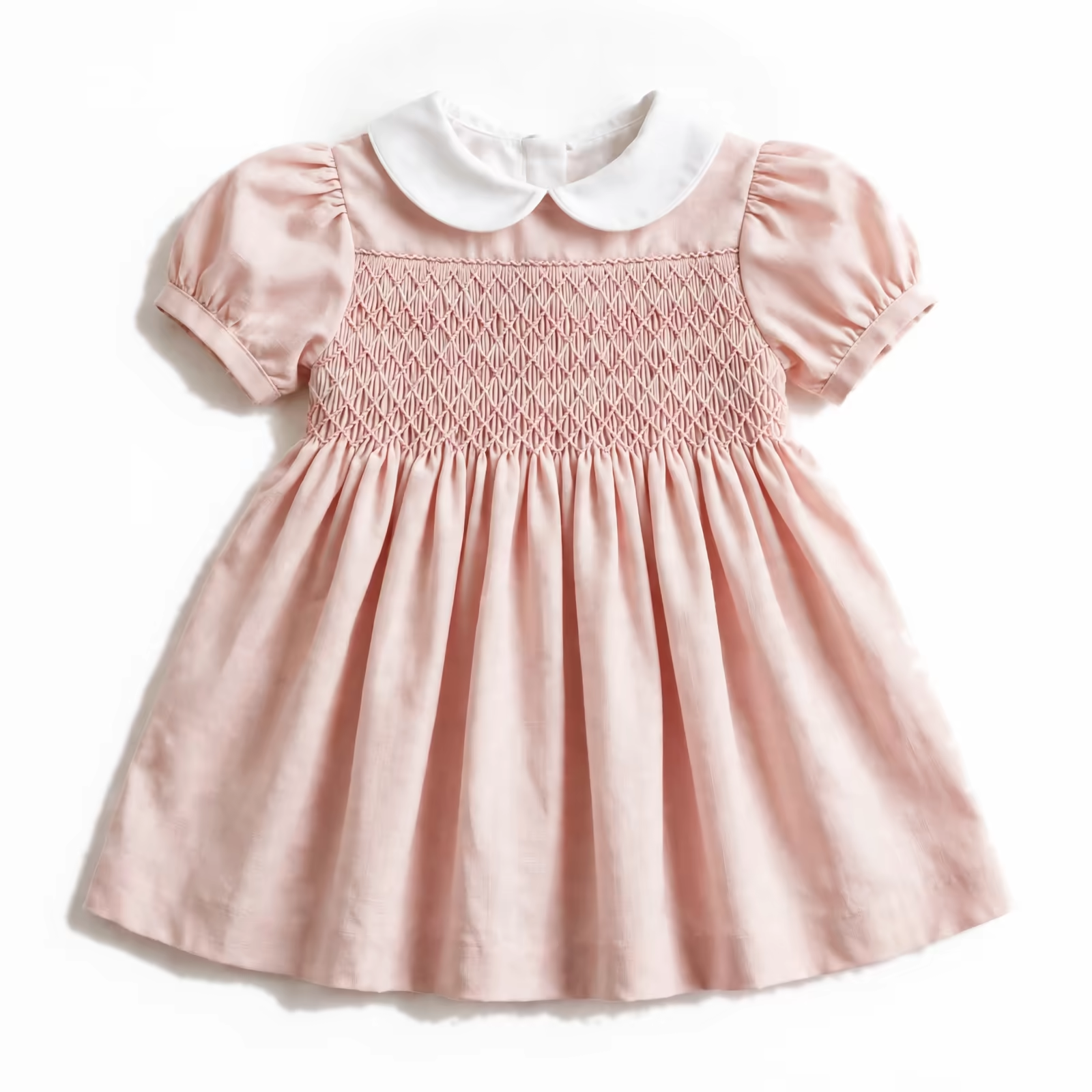
The front is built around the smocked panel: rows of diamond stitching worked by hand across pleated cotton, giving the bodice its stretch and its texture. Above it sits the white Peter Pan collar, and the puff sleeves gather softly at the shoulder.
The skirt is gathered full from the yoke and falls to a neat stitched hem. The back closes with a row of small buttons from the neck to below the waist, over a plain pink panel.
- Hand-smocked diamond bodice panel
- White Peter Pan collar
- Short puff sleeves, softly gathered
- Full gathered skirt, stitched hem
- Button opening down the whole back
Hand Smocking Is Slow Work, and That Is the Point
A smocked panel cannot be rushed: the cotton is pleated first, then stitched row by row so the diamonds sit even and the panel stretches evenly. Buyers run a thumb across the panel and feel for skipped stitches and uneven tension before they look at anything else on the dress.
The pattern is the buyer’s call: the classic diamond on this page, or a wave, a lattice or a floral-worked panel for a christening line. Each pattern is sampled on a real bodice, so the buyer approves the stitching itself, not a photograph of somebody else’s.
A Button Back That Makes Dressing a Baby Easy
Parents judge a baby dress at the changing table, and a back that opens fully is the difference between a calm change and a struggle. These buttons run the whole back, spaced so the opening lies flat when closed and opens wide when needed.
The buttons are sewn through the placket with enough thread shank to fasten easily, and the top button sits just under the collar. On the sample dress the buyer can open and close the back one-handed, the way a parent actually will.
Baby Dress Supplier in Bangladesh for USA Boutique Programmes
USA baby boutiques buy the smocked dress as their occasion anchor: christenings, first birthdays, family photographs. Their customers pay for the handwork, so the panel has to be flawless at reading distance, and the sizes have to run true because gifts are bought by age.
The grade can follow the boutique’s own age chart, and the dress can be packed folded with the collar protected so it shelves beautifully. Your pattern, your chart and your label inside the neck: the dresses arrive ready for the rail.
Build Sheet for the Blush Pink Smocked Dress
| Fabric | Woven cotton, soft baby finish |
|---|---|
| Bodice | Hand-smocked panel, diamond pattern |
| Collar | Peter Pan collar, white |
| Sleeves | Short puff sleeves, soft gather |
| Skirt | Full gathered skirt from the yoke |
| Back | Full button opening, small white buttons |
| Label | Buyer’s woven label inside the back neck |
| Packing | Folded singly, cartons sorted by age size |
| Colour | Blush pink as pictured, range colours on request |
Age Grading From Newborn to Twenty-Four Months
A baby range lives or dies on its grading: the three-month size and the twenty-four-month size are different garments in everything but design. Each age is graded from the buyer’s chart, with the smocked panel widening as the chest grows so the diamonds keep their proportion.
The skirt length follows the age too, sitting above the knee for crawlers and a touch longer for walkers. The middle age is sewn first and read against the chart before the rest of the run is cut.
Age Sizes Read on the Middle Grade
- Chest across the smocked panel, relaxed and stretched
- Dress length from shoulder to hem
- Sleeve opening against a baby’s arm
- Back opening length, button by button
- Collar fit sitting flat at the neck
Colours and Patterns for Occasion and Everyday Lines
Blush pink leads this page because it is the colour boutiques reorder without thinking. Beside it the card holds soft white, cream, mint and lilac, each sewn as its own run, and the collar can stay white across the set or tone with the dress.
An occasion line can carry a floral-worked smocking panel and a longer skirt on the same bodice. The everyday line keeps the diamond panel and the shorter skirt, and the sample round is where both are judged side by side.
Smocked Dresses From Bangladesh for UK Christening and Gift Ranges
UK christening and gift ranges buy the smocked dress boxed and ready to give, and their first question is whether the handwork justifies the gift price. This panel is stitched to be looked at closely: even diamonds, clean pleats, no loose threads at the collar or the hem.
The size labels can carry the age wording their gift buyers shop by, and the care print follows the wash the cotton was proven at. Delivery is planned backwards from the christening season, with pleating time reserved at confirmation, because handwork cannot be hurried at the end.
What the Sample Dress Proves Before the Run Starts
The sample dress is smocked, sewn and buttoned exactly as production will run, in the middle age size. The buyer checks the panel’s stretch, works the back buttons, and reads the collar sitting flat, the three things their customers will judge in the shop.
Notes from that check become written instructions before any pleating starts for the run: a diamond row deepened, a sleeve eased, a length adjusted. The first production dresses are then compared with the approved sample panel by panel.
- Sample smocked and finished as production
- Panel stretch and tension checked by hand
- Back buttons worked one-handed
- Buyer notes turned into written instructions
- First dresses compared panel by panel
How Finished Dresses Are Folded and Packed
Each dress is folded with the smocked panel flat and protected, the collar laid smooth, so the first thing a shopper sees on opening is the handwork. Cartons are packed by age size, counted twice before sealing, with the size groups marked to the buyer’s system.
Gift ranges can take the dresses packed with extra protection over the panel for boxed presentation. The format is the buyer’s call, written into the order sheet, and a photograph of the first sealed carton travels with the documents.
Soft Cotton Against a Baby’s Skin, Checked Before Cutting
A baby wears a dress against bare skin all day, so the cotton is read for softness before a single panel is cut: no rough hand, no scratchy finish at the collar or the armholes. The seams inside are finished flat, so nothing rubs at the neck or under the arms.
The buttons are checked for tight sewing on every dress, pulled by hand at the final read, because a baby dress has to be safe as well as pretty. Any dress with a loose button is opened and re-sewn, never passed.
- Softness read by hand before cutting
- Inside seams finished flat, nothing to rub
- Buttons pull-tested on every dress
- Collar and armholes checked for scratch
Planning a Season Around Handwork Lead Times
Smocking sets the calendar for this dress: a panel takes the time it takes, so the season is planned backwards from the shop’s launch date, with pleating started at confirmation. Buyers who lock the pattern and colours early get the calm version of this schedule.
A range that runs two patterns, diamond for everyday and floral for occasions, can stagger the pleating so both lines land together. The plan is drawn up with the buyer at the quote stage, in weeks, so the launch date is a promise the handwork can keep.
- Pattern and colours locked at confirmation
- Pleating started the same week
- Middle age size approved before the full grade
- Launch date planned backwards in weeks
- Reorder panels reserved for the season’s second drop
How Boutique Dresses Are Prepared for Gift Buyers
Half the occasion dresses a boutique sells leave the shop as gifts, and a gift is judged before it is worn: on the fold, the tissue and the way the dress lifts out of its bag. These dresses are folded around the smocking so the handwork faces up and is never creased, pressed once lightly, and bagged flat with the size card showing, so a shop can tissue-wrap it in a minute without touching an iron.
Where a boutique sends its own boxes, ribbons or gift cards, they are packed with the dresses here and the shop adds nothing but the till receipt. Where it does not, the plain bag and card the dresses travel in are clean and neutral enough to go straight into a gift bag at the counter.
Spare Buttons Sewn Into Every Dress
Each dress carries a spare button on a thread inside the back seam. Baby dresses lose buttons in washing baskets and car seats, and a mother who finds the spare sewn in remembers the shop kindly; a dress that cannot be buttoned is simply not worn again.
More Baby and Kids Wear From This Floor
The same floor sews the girls floral skater dress for older girls and the girls sweater and skirt set for winter ranges. Everyday baby programmes take the baby sweatshirt and jogger set, and summer sets run through the girls star print set.
Buyers researching the baby dress wholesale market in Dhaka and other sourcing markets can also read exporter profiles kept by the International Trade Centre.
Questions Baby Dress Buyers Ask Before Ordering
Is the smocking really done by hand on every dress?
Yes. The panel is pleated and stitched by hand row by row, which is why the diamonds sit even and the bodice stretches the way it does. The sample dress carries the same handwork as the run, so what the buyer approves is exactly what their customers receive.
Can the dress run in white for a German christening range?
Yes. White is a standard colour for this dress, with the collar in white as well, and the smocking pattern can switch to a floral-worked panel for the christening line. The range simply names the colour and pattern, and the sample is smocked in white first.
Can our label sit inside the back neck with the age size on it?
Yes. Your woven label is sewn inside the back neck as pictured, and the age size can be woven into the same label or carried on a small side label, whichever the shop’s customers look for. Both placements are proofed on the sample dress before the run is pleated.
Can the skirt be made longer for a UK party range?
Yes. The skirt is cut from the yoke, so its length is a pattern decision: a longer, fuller skirt for party and photography ranges, the standard length for everyday. The longer version is sampled first so the buyer can judge the proportion against the smocked bodice before the run.
Quoting a Baby Dress Range for Your Shop
Send the age sizes your shop sells, the smocking pattern your customers love and the colours your season is built on, and the quote comes back worked out on those inputs. A photograph of the dress you currently stock is a perfectly good starting reference.
Every figure follows your level: your quality in the cotton, your fabric softness, your design in the panel and collar, your measurement on every age. Write through the contact page and the sample dress is on the smocking frame this week. From first pleat to final button, the delivered dresses match the approved sample dress.