
Bulk T-Shirt Supplier in Bangladesh Serving Chattogram Port Shipments for the USA
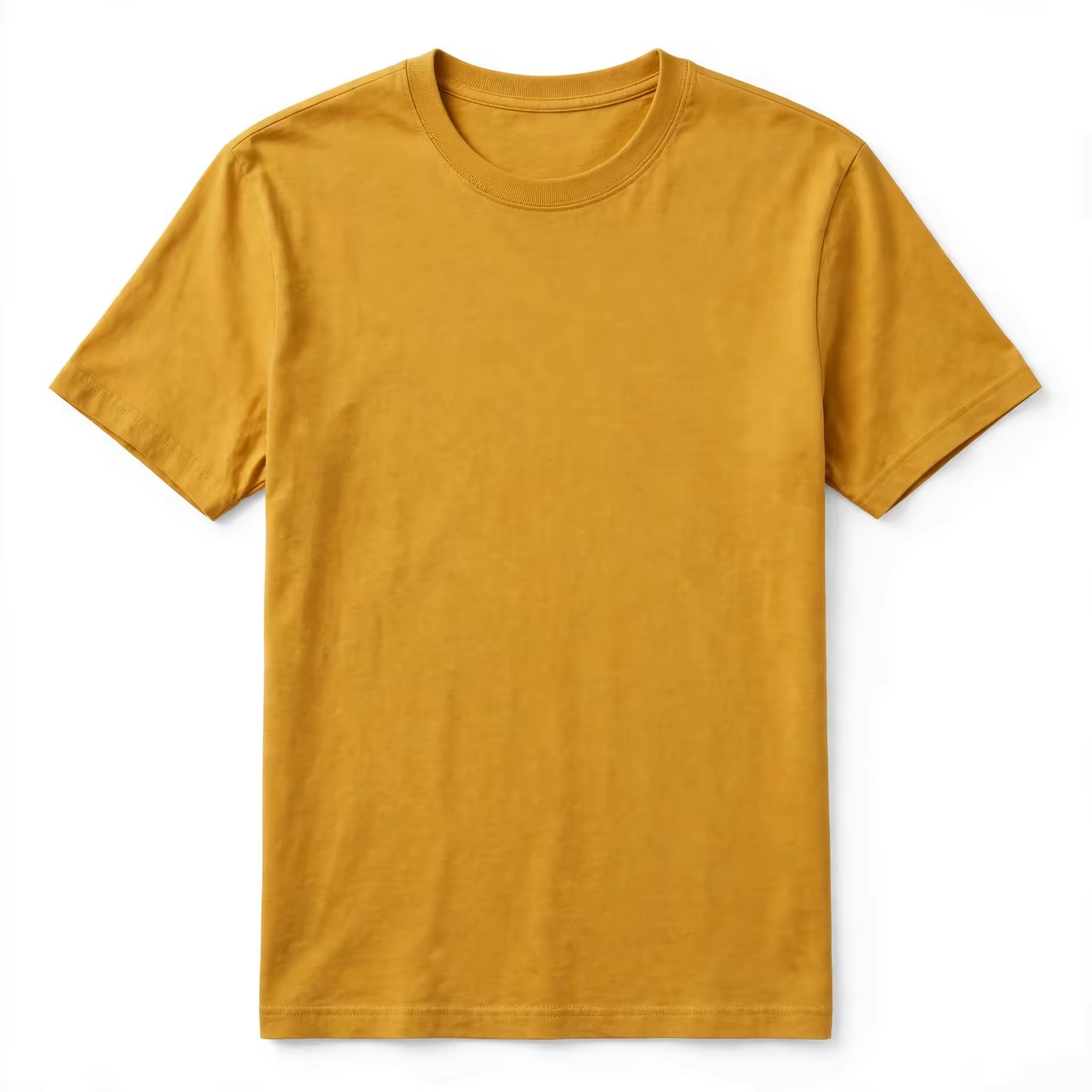
The jersey is a combed cotton knit, and combing is what separates a bulk shirt that survives a promotion season from one that twists after two washes: the short fibres are combed out before spinning, so the yarn is smoother, stronger and takes print more cleanly. The mustard here is one colour from a card that runs to dozens.
Each weight in the range behaves differently on the body and on the shelf, and the sample round is where your programme picks its own: a lighter jersey for giveaway volume, a heavier one where the shirt itself is the product. Cuttings of each weight, in your colours, travel with the samples.
What Top Supplier for Bulk T-Shirt Purchases Chattogram Bangladesh Buyers Audit First
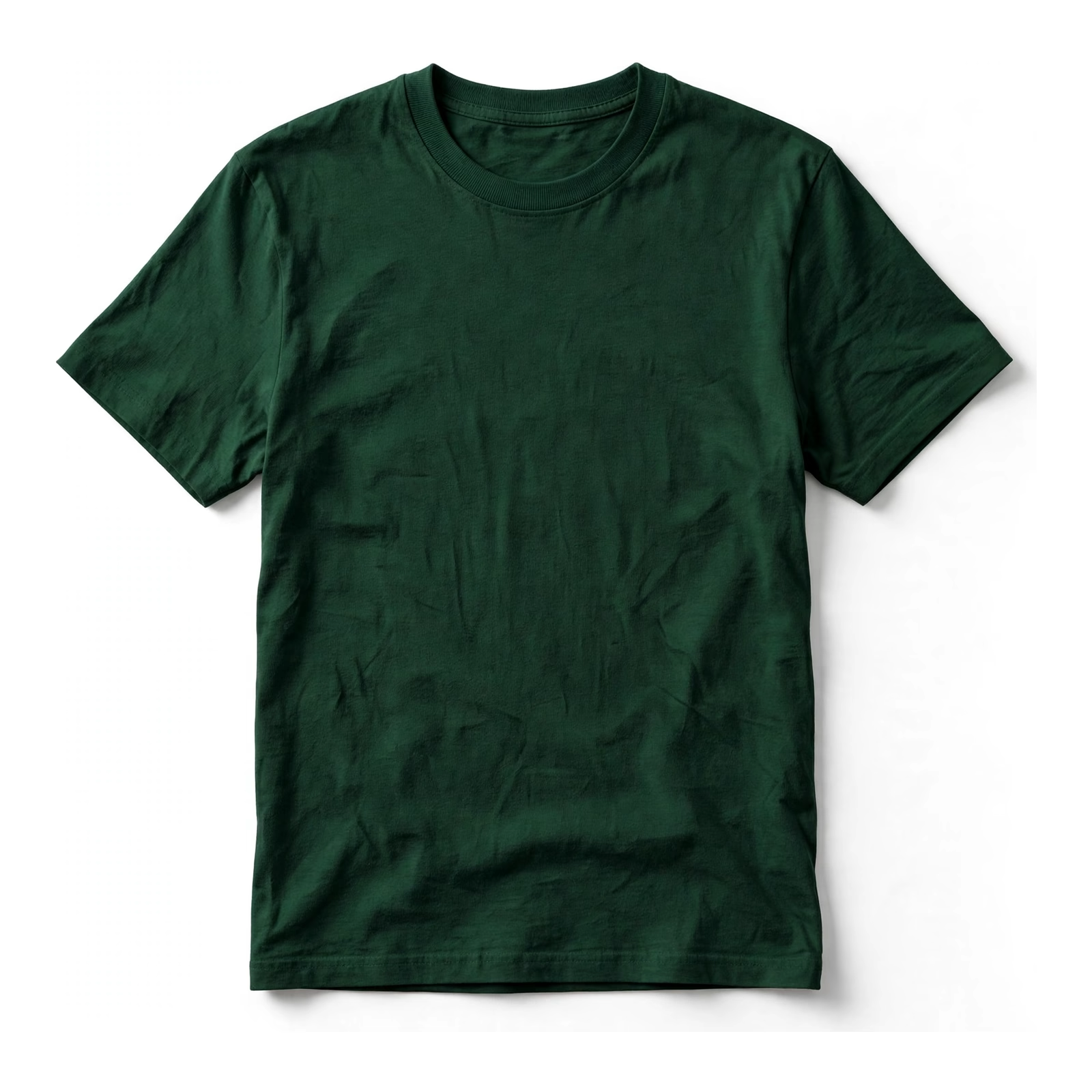
The shirt is a classic men’s crew neck: a ribbed collar sitting flat at the throat, set-in short sleeves with plain hems and a straight bottom hem. The front is completely plain, no pocket, no print, which is exactly what bulk buyers ask a blank to be.
The body is cut with side seams rather than as a tube, so the shirt keeps its square shape on the rail and on the body. Shoulders are taped inside, and the collar is sewn with a cover stitch that lies flat against the skin.
- Ribbed crew collar, flat at the throat
- Set-in short sleeves with plain hems
- Completely plain front, ready for print or plain wear
- Side-seamed body that holds its shape
- Shoulder tape and a flat cover-stitched collar
Why Bulk Buyers Care About the Knit Before the Price
A bulk order lives or dies on consistency: the five-thousandth shirt must match the sample the buyer approved, in weight, shade and hand feel. The jersey here is knitted in one run per colour, weighed roll by roll, and any roll outside the weight band is set aside before cutting.
Shade is read the same way, panel against the approved sample under daylight lamps at the start of every shift. That discipline is what makes a repeat order simple: the second run starts from the same cloth standard as the first.
Fabric Weights for Different Bulk Programmes
Promotional programmes usually take a lighter jersey that keeps the unit cost lean while still feeling like a real shirt. Retail basics take a heavier cloth with a denser hand, the weight a customer notices when they lift the shirt off the rail.
Both weights run on this pattern, and the sample round is where the buyer handles them side by side. Your programme’s weight is then locked into the order sheet, and the bulk is weighed against it before a single piece is cut.
Bulk T-Shirt Exporter in Bangladesh Working With German Volume Buyers
German volume buyers order blanks for workwear decoration and retail basics, and they audit the paperwork as closely as the shirts: fibre declarations, care text in German and cartons marked for their scanning systems. Those documents are prepared during production, not chased after it.
The size ratios for the German market run from their own chart, which often grades longer in the body than the standard. Your chart, your ratios and your label in the neck: the cartons arrive ready for their programme.
Build Sheet for the Mustard Crew Neck
| Fabric | Combed cotton single jersey, weight set by the programme |
|---|---|
| Collar | Ribbed crew collar, elastane option for recovery |
| Sleeves | Set-in short sleeves, plain hems |
| Body | Side-seamed, straight hem, plain front |
| Shoulders | Taped inside for shape |
| Stitching | Cover-stitched collar, twin-needle hems |
| Label | Buyer’s woven label inside the back neck |
| Packing | Size and colour ratios exactly as ordered |
| Colour | Mustard as pictured, full card for bulk runs |
How Size Ratios Are Packed for Bulk Orders
Bulk buyers think in ratios: so many small, so many medium, so many large in every carton or every bundle. The packing line works from the buyer’s ratio sheet, and each carton is counted twice before it is sealed and marked.
If a programme sells harder in one size, the ratio changes with a word from the buyer and the next run follows the new sheet. Nothing is packed from habit; the sheet on the order is the sheet on the line.
What the Packing Line Checks Before a Carton Closes
- Count per size against the ratio sheet
- Colour separation inside mixed cartons
- Label and care text matching the destination
- Carton marks matching the buyer’s format
- Weight of the sealed carton recorded
The Colour Card Behind the Mustard
Mustard leads this page, and the bulk card behind it holds the shades volume programmes rotate: charcoal, deep teal, burgundy, olive, stone and white. A buyer’s own shade is matched on a lab dip and proven on a sewn sample before bulk dyeing begins.
Because each colour is knitted and dyed as its own run, a five-colour programme arrives with five clean shades and no cross-tones. The sample of every colour is kept on file, so a repeat order matches the first delivery.
Plain T-Shirts From Bangladesh for Canadian Promotional Programmes
Canadian promotional programmes buy blanks by the season, spring events through summer festivals, and they need the shirts in hand before the print date. Production slots for bulk runs are booked against the approved sample with the jersey reserved, keeping the delivery ahead of the printer.
Bilingual care text is set for programmes that sell or distribute in both languages, and the size chart can follow the North American grade the buyer’s customers expect. Your ratios and your timeline drive the schedule, not the other way round.
Shipping Bulk Orders Through Chattogram Port
Finished cartons move to Chattogram port, the country’s main sea gateway, on a schedule set backwards from the vessel the buyer books.
Carton marks and packing lists are prepared to the forwarder’s format so the handover at the port is a signature, not a discussion.
For air-freight programmes the same discipline applies in smaller cartons, counted and marked the same way. The buyer’s forwarder receives the documents as the goods leave, keeping the chain visible from our door to their warehouse.
A copy of the carton list also goes to the buyer directly, so their warehouse team can plan the intake before the vessel docks.
What a Bulk Sample Round Looks Like
The round opens with one shirt per colour in the middle size, sewn from the actual bulk jersey, not a sample-room substitute. The buyer washes them, prints one if the programme prints, and sends back the points that matter.
Those points are worked into the order sheet once, and the bulk follows the sheet. A second sample is sewn only when a change is structural; a shade or a collar note is settled on the sheet and proven at the first bulk check.
- One shirt per colour in the middle size
- Sewn from the real bulk jersey
- Wash and print tests on the buyer’s side
- Changes written into the order sheet once
- First bulk pieces checked against the sheet
What Arrives With a Bulk Confirmation
Beside the approved shirts, the buyer receives the weight reading of the jersey rolls set aside for the order and a shade card cut from the same dye run. Those two records are the anchor for any later question about consistency.
They are also the anchor for the repeat order: when the programme reorders, the new run is matched against the kept sample and the kept card. Consistency stops being a promise and becomes a comparison anyone can make.
Reading a Bulk Sample the Way a Merchandiser Does
An experienced buyer reads a blank in four moves: the collar is stretched and watched for recovery, the body is twisted to see whether the side seams wander, the jersey is weighed in the hand against the order weight, and one shirt goes straight into a hot wash.
Our sample round is built for exactly that handling, which is why the samples are sewn from the bulk jersey and finished the way the bulk will be finished. A shirt that survives a merchandiser’s four moves survives a season in your customers’ wash cycles.
- Collar stretched and read for recovery
- Side seams checked for twist after washing
- Weight compared against the order sheet
- Shade read again after the wash test
- Shrinkage measured against the chart allowance
Topping Up the Sizes That Sell First
Every bulk programme learns the same lesson in its first month: the middle sizes go first. Medium and large empty while the ends of the curve are still folded, and a programme that cannot top up quickly starts turning buyers away at exactly the moment the promotion is working. Your size ratio is kept on file here, so a top-up run is cut to the sizes you name, in the same colours and the same cloth, without opening the whole negotiation again.
The top-up carries the same labels, the same packing and the same shade discipline as the first run, because it is sewn from the same pattern file and the same colour card. A shirt that arrives in week six sits on the shelf beside a shirt from week one and no customer can tell them apart.
Your Ratio, Kept on File for the Season
Send the ratio once, with the first order, and it stays attached to your programme for the season. When the top-up call comes, the only question is how many; the sizes, colours and cloth are already decided.
More T-Shirt Lines Sewn for Bulk and Retail
The same line sews the white henley t-shirt for retail basics and the fern green pocket t-shirt for buyers who want one quiet detail. Women’s programmes take the cream zip crop top, and print stories run on the abstract print crew neck.
Volume exporters in Bangladesh are also profiled for overseas buyers by the International Trade Centre, a useful cross-check when a programme is choosing its supplier.
Questions Bulk T-Shirt Buyers Ask Us
Can one order mix five colours and four sizes?
Yes. Mixed colour and size orders are the normal shape of a bulk programme here, packed by the buyer’s ratio sheet with colours separated inside the cartons. The packing list mirrors the sheet exactly, so the receiving warehouse counts against the same numbers.
Will the second order match the first delivery’s shade?
Yes. The first delivery’s sample and shade card stay on file, and the repeat run is dyed and read against them before cutting. If a dye lot drifts, it is caught at the reading table, not at the buyer’s warehouse.
Can the shirts arrive ready for our printer in the UK?
Yes. The plain front, the side-seamed body and the smooth jersey surface are chosen with printing in mind, and cartons can be packed flat and unbagged for a print line on request. Tell us the printer’s handling format and the packing follows it.
Can our label and a printed size sit in the neck together?
Yes. Your woven label is sewn into the back neck as pictured, and a printed size mark can sit beside it or below it as your artwork sets out. The arrangement is proofed on the sample itself before the bulk is sewn.
Can the same blank run in a heavier weight for our German retail line and a lighter one for promotions?
Yes. The pattern is shared, so one approval covers both weights, and the two runs are knitted, cut and packed as separate lots with their own weight readings. Many buyers run exactly this split: a retail weight under their label and a promotional weight for events, from one supplier and one chart.
Quoting a Bulk T-Shirt Programme for Your Market
Send the colours, the fabric weight you sell and the size ratios your programme runs, and the quote comes back built on those numbers. A photograph of the blank you currently buy is a perfectly good reference.
Every line of that quote traces back to your level: your quality in the jersey, your fabric weight, your design in the collar and fit, your measurement on every size.
Write through the contact page and the first samples are cut this week. When the programme repeats next season, the kept sample, the shade card and the weight record are already on file, so the reorder opens with production rather than another sampling round.