
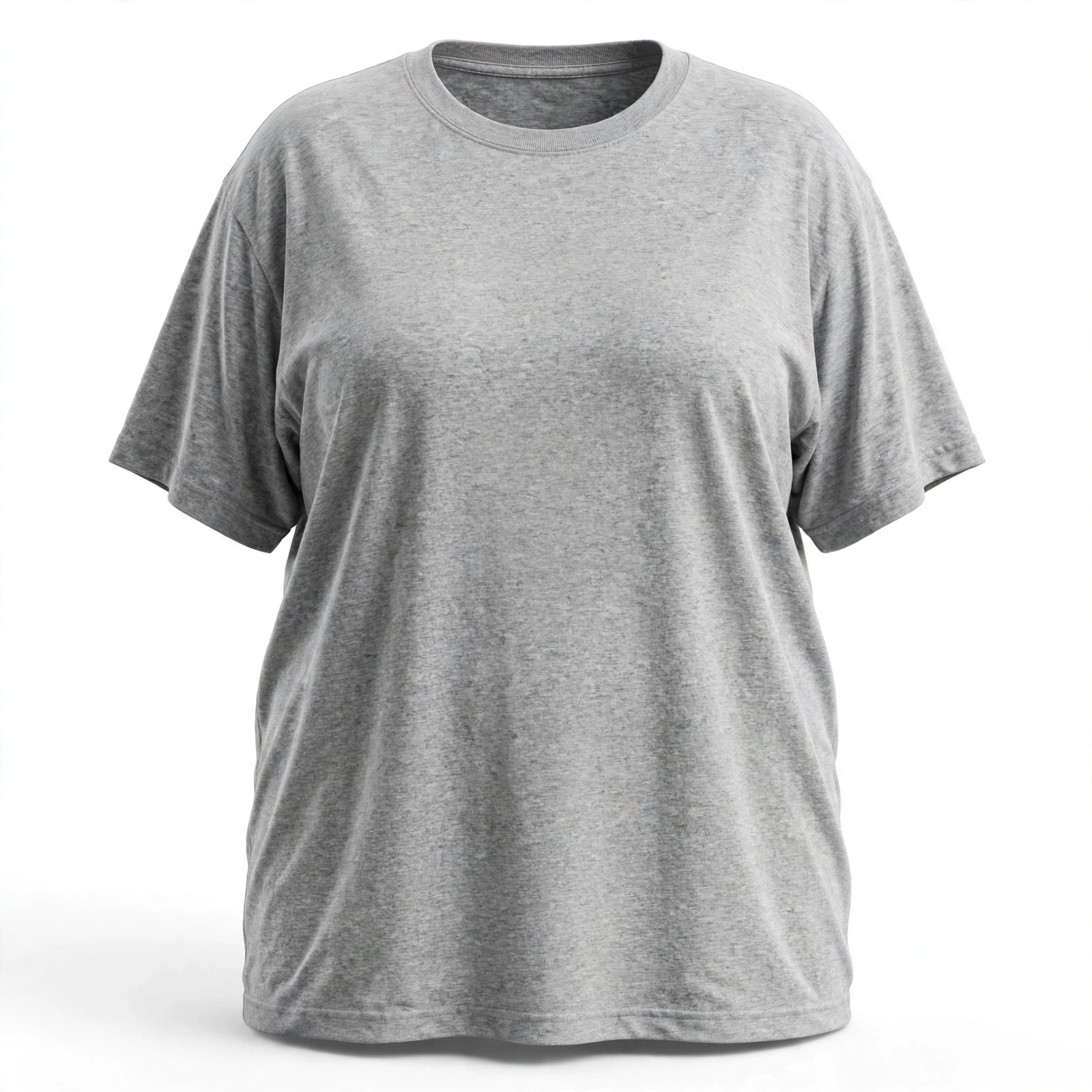
Blank T-Shirt Made of 100 Cotton From Bangladesh, Ready for Your Print
A blank lives on its surface. The single jersey used here is knitted from combed cotton yarn and finished so the face is smooth and even from shoulder to hem, because any slub, shadow or thin place in the cloth becomes the loudest thing on the finished garment once a print sits on it. Printers judge a blank in the first three seconds, and they judge the surface.
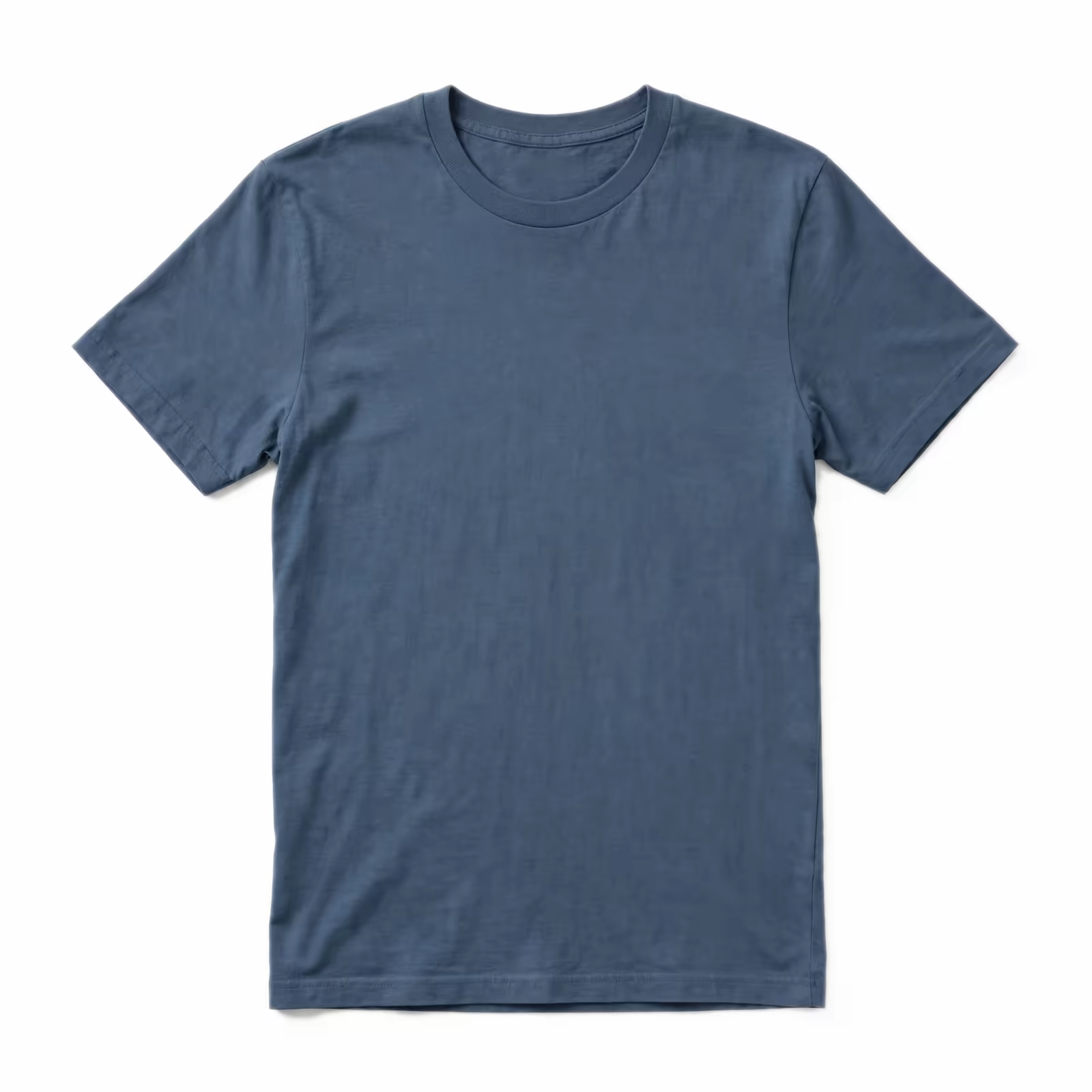
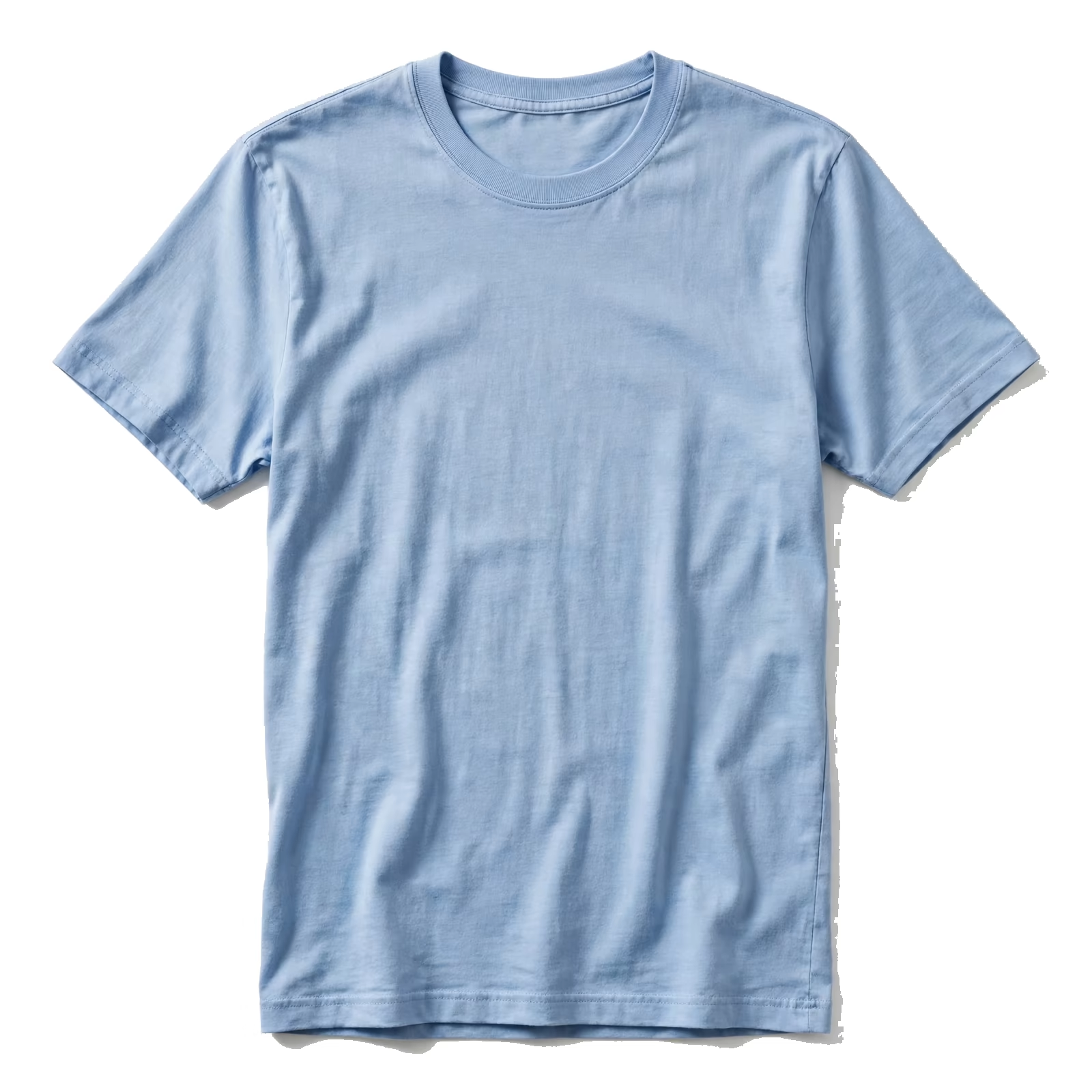
The slate blue is dyed into the yarn order, so the colour runs through the jersey, and the collar rib, dyed in the same bath, matches the body exactly instead of sitting half a shade away. Cuttings of the jersey, in your colours and weights, travel with the sample blanks.
The Slate Blue Blank, Part by Part
The front is one clean panel of slate blue jersey, cut straight with no pocket and no print. The crew collar is ribbed and sits flat, the short sleeves carry plain hems, and the body closes with a twin-needle stitched hem.
The back is as plain as the front, which is what a printer wants: two full panels ready for a chest print, a back print or both. Side seams keep the body true, so a print sits square on the wearer instead of twisting.
- Pure cotton single jersey, no blends
- Ribbed crew collar that holds its shape
- Completely plain front and back panels
- Side-seamed body, prints sit square
- Twin-needle hems on sleeves and body
Why Printers Ask Whether a Blank Is Really All Cotton
A blended blank changes how ink sits and how a print cures, and a shop that has been caught once asks the fibre question first. This jersey is cotton through and through, so screen ink, discharge and digital prints behave the way the printer’s own tests say they should.
The surface is knitted smooth and finished even, without the slubs that break a fine halftone. On the sample blank the printer can run their own press test, with their own inks, before the programme is priced.
Weight Is a Choice: Light Fashion Jersey or Heavy Work Blank
One blank cannot serve a summer fashion line and a workwear programme, so the weight is set per order. A lighter jersey drapes for retail; a heavier one stands up to daily wear, repeated washing and a chest logo that gets worked hard.
The buyer names the hand they want and the sample is knitted at that weight, weighed and washed before approval. Once the weight is locked, every repeat run is knitted to the same figure, so this season’s blank matches last season’s on the rail.
Blank T-Shirt Supplier in Bangladesh for USA Print Programmes
USA print programmes buy blanks by the colour card and the size run, and they buy them plain enough to carry anything from a tour print to a corporate mark. This tee gives them a true cotton base with sizes that match the chart their customers already order by.
Because the decorating happens stateside, the packing keeps the shirts clean and flat, folded so the chest panel arrives uncreased for the press. Your weight, your chart and your label inside the neck: the blanks land ready for the print floor.
Build Sheet for the Slate Blue Cotton Blank
| Fabric | Single jersey, 100 percent cotton |
|---|---|
| Collar | Ribbed crew neck, shape-holding |
| Sleeves | Short sleeves, plain stitched hems |
| Body | Side-seamed, straight regular fit |
| Print Area | Plain chest and full plain back |
| Hem | Twin-needle stitched bottom hem |
| Label | Buyer’s woven label inside the back neck |
| Packing | Folded flat, cartons sorted by size and colour |
| Colour | Slate blue as pictured, full card on request |
How the Fit Block Is Graded So Prints Sit in the Same Place
A chest print is placed by measurement from the collar, so a block that wanders between sizes puts the artwork in a different place on every shirt. This block is graded from the buyer’s chart with the chest width and body length moving together, size by size.
The middle size is sewn first and the print position is read on it before the run is cut. A brand that wears its print high or low can set that datum on the sample, and every size then follows it.
Fit Points Read on the Middle Size
- Chest width flat, seam to seam
- Body length from the collar to the hem
- Sleeve length and opening
- Collar depth and rib recovery
- Print datum measured from the collar
A Colour Card Built for Repeat Programmes
Slate blue leads this page because it carries prints in light and dark inks equally well. Around it the card holds the working colours a blank programme lives on: whites, greys, reds, greens and earth tones, each dyed as its own run so a reorder matches the shirts already in the customer’s hands.
A programme colour can also be dyed to a submitted swatch, with the lab dip approved before knitting is dyed at scale. The sample blank is sewn from the approved dyeing, not from a similar shade off the shelf.
Cotton Blanks From Bangladesh for UK Workwear and Uniform Programmes
UK workwear and uniform programmes buy the blank as the base under a chest logo, and their test is washing: the shirt is laundered hard and often. This jersey is finished to settle before cutting, so the size that goes on shift is the size that comes out of the laundry.
The collar rib is part of that test, read again after the sample’s washes, because a sagging collar ends a uniform shirt’s life before the body wears out. Delivery is planned around the programme’s issue dates, with the weight and colours reserved at confirmation.
What the Sample Blank Proves Before Knitting Starts
The sample blank is knitted, dyed and sewn exactly as the run will be, in the middle size. The buyer washes it, prints it and wears it: the three tests a blank actually has to pass, done on the real cloth rather than a promise.
Any change from those tests is written into the order sheet before production knitting begins: a weight adjusted, a length added, a collar tightened. The first production shirts are then checked against the approved blank, chest, length and collar, one by one.
- Sample knitted and dyed as the run will run
- Washed, printed and worn by the buyer
- Changes written into the order sheet once
- First shirts checked against the approved blank
- Repeat runs knitted to the locked weight
How Finished Blanks Are Folded and Packed
Each shirt is folded flat with the chest panel smooth, so it reaches the printer ready for the press without a re-iron. Cartons are packed by size within each colour, counted twice before sealing, with the mix marked to the buyer’s system.
Programmes that decorate by size can take the packing sorted for their print order instead of ours. The format is the buyer’s call, written into the order sheet, and a photograph of the first sealed carton travels with the documents.
Shrinkage Settled Before Cutting, So the Sold Size Is the True Size
Cotton moves in its first washes, and a blank that shrinks after printing takes the artwork’s proportions with it. This jersey is finished and rested before the panels are cut, so the chest and length on the size label are the chest and length after the customer’s wash.
The sample blank is washed before approval and measured again, and those post-wash figures are what the chart promises. A programme that sells on a printed size chart can publish it with confidence, because the shirt behind the chart has already done its shrinking.
- Jersey finished and rested before cutting
- Sample washed and re-measured before approval
- Post-wash figures are the chart’s promise
- Print proportions survive the first wash
Relabelling and Decorator Programmes Welcome
Many blanks are bought to become somebody else’s shirt, so the neck can be left with a tear-away label that a decorator removes in seconds. The body carries no other branding anywhere: no sleeve mark, no hem tag, nothing that has to be unpicked before the shirt is sold under the buyer’s name.
For brands that keep our sewing label, the woven label sits inside the back neck as pictured, with the size woven beside it. Either way, the choice is made on the sample blank and written into the order sheet, so the whole run arrives finished the same way.
How Blanks Are Counted and Bundled for Decorators
A decorator does not unpack the way a retailer unpacks. Blanks are bundled flat in dozens by size, each bundle tied and labelled on the outside with size, colour and count, so a print shop pulls exactly the size it is about to print and the rest of the stock stays folded and clean. Nothing in the bundle needs ironing before it goes on the platen.
Cartons carry one colour each unless the order asks for mixed cartons, and the packing list states the size curve inside in the same order the bundles sit. A shop running a five-colour programme can shelve five labelled cartons and find any size in any colour in under a minute.
Mixed-Size Bundles Versus Single-Size Boxes
Programmes that print to order usually take single-size bundles, because they print what the day’s orders ask for. Programmes that print stock for a shelf often take the ratio bundle, one of each size in the curve inside a single wrap. Both are packed here; the choice is the buyer’s, and it is written on the order, not decided at the packing table.
More Cotton T-Shirts From This Floor
The same floor sews the bulk t-shirt programme for large plain orders and the white henley t-shirt for a buttoned neckline. Pocket styles run through the fern green pocket t-shirt, and fine-knit tops through the cream zip crop top.
Buyers researching a blank t-shirt made of 100 cotton from Bangladesh and other sourcing markets can also read exporter profiles kept by the International Trade Centre.
Questions Blank T-Shirt Buyers Ask Before Ordering
Is the jersey really free of polyester and other blends?
Yes. The knit is pure cotton, which is the whole point of this blank: printers can run the inks and cure settings they use for cotton without surprises. The fibre content is printed on the buyer’s label spec, and the sample blank is the same cloth the run is knitted from.
Can we take the blank in our own colours for a Canadian uniform programme?
Yes. Colours are dyed to the programme’s swatches, with a lab dip approved before the dyeing is scaled, and the size run can follow the Canadian chart the crews already wear. The programme simply names the colours and the chart, and the sample is sewn in the lead colour first.
Can our label replace the neck label with a tear-away option?
Yes. Your woven label is sewn inside the back neck as pictured, or a tear-away label can be fitted where a decorator needs a clean neck for relabelling. Both options are fitted to the sample blank, so the buyer approves the real finish before the run.
Can the sleeves be lengthened for a German fashion line?
Yes. Sleeve length is a pattern measurement like any other: the line can run a longer, dropped sleeve or a shorter retro cut on the same body block. The changed sleeve is sewn on the sample blank first, so the buyer judges the proportion on a real shirt before the run is knitted.
Quoting a Blank Programme for Your Range
Send the weight your programme runs, the colours on your card and the size chart your customers order by, and the quote comes back worked out on those inputs. A photograph or a single shirt from your current supplier is reference enough to start from.
Every figure follows your level: your quality in the jersey, your fabric weight, your design in the fit and collar, your measurement on every size. Write through the contact page and the sample blank is on the knitting schedule this week.